
Dr. Ravinjay kuckreja
Select a language | pilih bahasa
Dr. Ravinjay Kuckreja is a philosopher, teacher, and researcher focusing on Hinduism and Buddhism. He explores Balinese culture and ethnography, with a passion for making ancient and indigenous wisdom accessible to wider audiences. Ravinjay is Indonesian of Punjabi heritage and has lived in Bali for over a decade. He earned his doctoral degree through research on ancient Balinese and Indian scriptures, and currently creates educational content and teaches from Secondary School up until Doctorate students on philosophy and religion.
Research
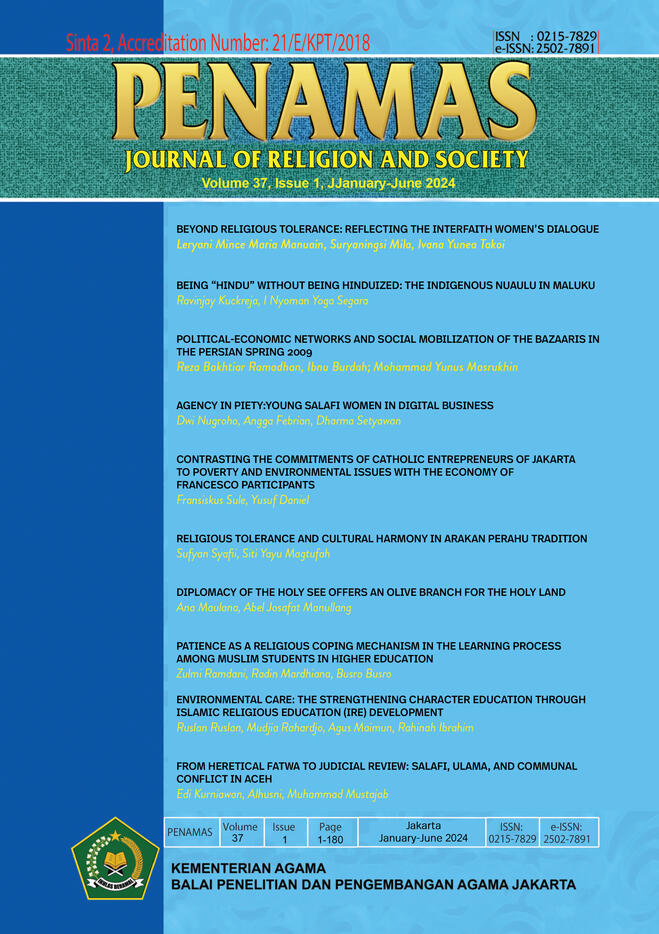
Being “Hindu” Without Being Hinduized: The Indigenous Nuaulu in Maluku
Fearing discrimination from the Indonesian government, the Nuaulu tribe in Central Maluku have chosen to declare themselves as “Hindu”. Their ancestral customs are similar to mainstream Hindu beliefs and traditions. However, they lack the Hindu Gods, the Sanskrit mantras and the unifying scripture of the Vedas. What is left is a local indigenous religion. However, their bad experience with being categorized as an ancestral faith (aliran kepercayaan) has led them to be self-declared Hindus. In such a circumstance, Hinduism can either unconditionally accept them despite the lack of evident resemblance, or the Nuaulu tribe can alter their religion’s façade to duplicate crucial Hindu identifiers. This paper questions what it means to be a Hindu, what Hinduization is, and how discriminatory definitions torment indigenous religions.
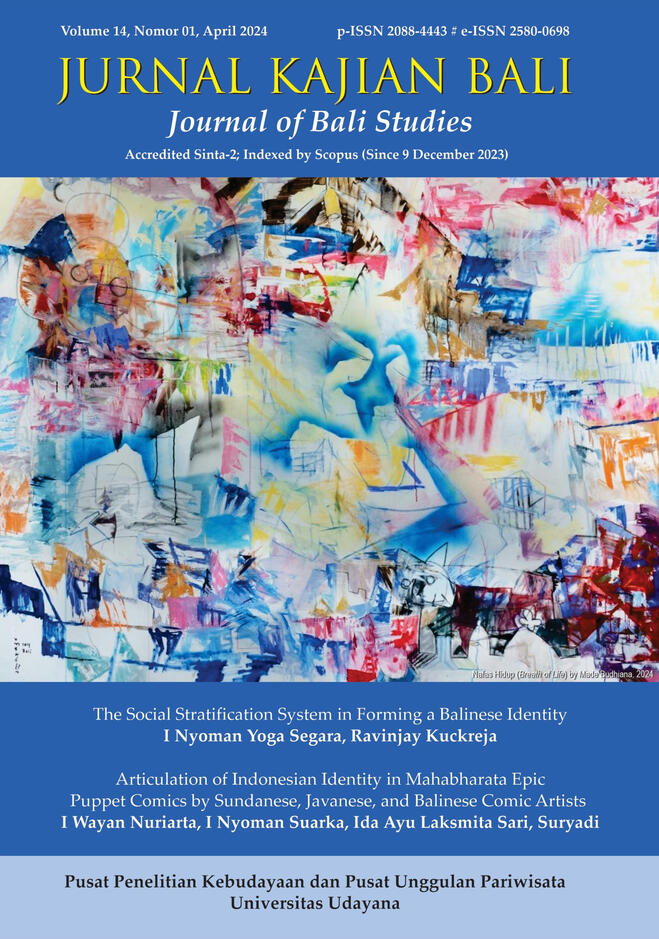
The Social Stratification System in Forming a Balinese Identity
This article defines the various layers and identity labels of the Balinese society. Much of their indigenous customs have been linked with Hinduism, and many would regard the two to be inseparable. This article, however, attempts to separate the indigenous elements of ancestral worship from the Vedic or Hindu understanding of societal divisions in order to properly study the two and how they influence one another. The history of the island has enforced the rigid caste system, but the application of Hindu philosophy serves an idealized definition of caste. In such a way, the Hindu or Vedic belief does provide much relief for Balinese society. However, they are still defined by their patrilineal heritage, and are bound to ancestral worship as per their indigenous religion. Fueled by the contemporary socio-political landscape of Bali, there is a need to properly define what Balinese identity actually is.
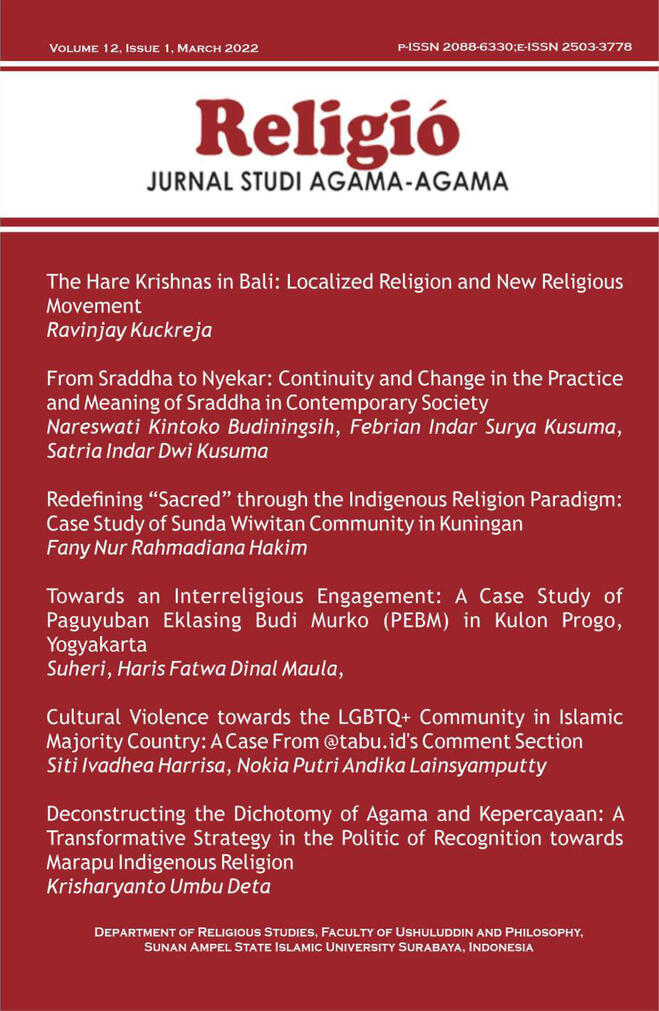
The Hare Krishnas in Bali: Localized Religion and New Religious Movement
As the Balinese sought official religious acceptance in Indonesia, they formalized their ethnic customs and transformed them into a universal religion with an Abrahamic model called “Agama Hindu Dharma”. In aligning itself with Hinduism, the Balinese had to restructure their internalized indigenous faith and share it with Hindus beyond the island, including with others in the archipelago and the religious hearth of India. The International Society for Krishna Consciousness (ISKCON), commonly known as The Hare Krishna Movement, is a Hindu-based New Religious Movement. With their active presence in Bali, they provided an informative and devotional perspective for inquisitive Hindus. Preferring their local expression of Hinduism instead, ISKCON books and teachings were banned in 1984 for disrupting public order during the repressive era of President Suharto. The political reformation of 1998 allowed for the recognition of ISKCON, but the exclusivism of Hare Krishna members threatened many orthodox Balinese Hindus. This opposition culminated in 2020, resulting in a decree restricting all non-Balinese Hindu sects from practicing in the Hindu-majority province. This paper documents the formalization of the indigenous Balinese theology and its recent interaction with a multinational New Religious Movement.
classes
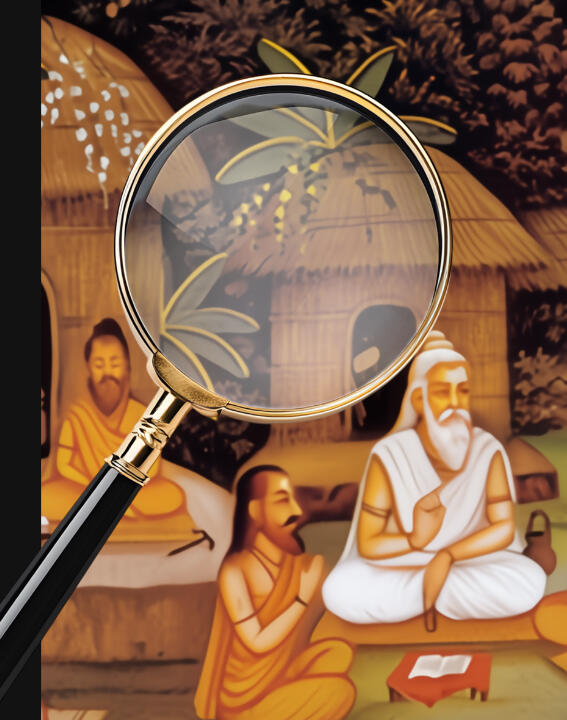
Darśana: Philosophical Schools of India
An introduction to Indian philosophy through the nine darśanas across Hindu, Buddhist, and Jain traditions. These classes explores their historical setting, major debates, and how each system understood reality, knowledge, and liberation within a shared intellectual world.
Being Bali Podcast
Cultural insights into the mystical island of Bali, home of an ancient blend of local beliefs and a newly defined Hinduism. Step into the worldview of a local, the duty they must uphold and explore living in the kaleidoscope of Indonesia.This is #BeingBali.
Events

medi.nasi
Do you control your emotions — or do they control you? Most of us would like to think it's the former. But Buddhist psychology suggests the honest answer is more complicated. medi.nasi is an invitation to find out. Through a shared meal and a structured five-step practice, you'll learn to identify what you're actually feeling, examine it, and — one dish at a time — begin to understand it.
Do your emotions follow you into your work, your relationships, your quietest moments, no matter how well you think you understand them?Buddhist psychology teaches that what we call an emotion is not a single, solid thing. It is a temporary configuration of mental factors, arising from specific conditions, lasting for a time, and passing away. The problem is not that we feel too much. It is that we rarely stop to actually examine what we are feeling, with precision, with honesty, with the willingness to look.medi.nasi is a structured philosophical practice that uses a shared plant-based meal as its method.Before the food arrives, you will sit with the Menu Emosi, a curated list of emotional states, and name what you are actually carrying right now. Not what you think you should feel. What is genuinely present. You will journal it, give it a precise name, and claim it.Then you will build your plate. Every dish you choose will represent one of those emotional states. The rice, the sambal, the side dishes, each one becomes a conscious stand-in for something internal. What you are carrying moves from inside you onto the table in front of you, tangible and visible.You will share what is on your plate with the group, not your story, but your dishes. The food mediates the conversation, creating just enough distance to speak honestly without oversharing.Then you eat. Slowly. One dish at a time. Because what you have placed on that plate is no longer just food. It is an emotion you have chosen to meet, to taste, and to digest, not just intellectually, but in the body, where emotions actually live.Each guest also receives a journaling workbook to use throughout the session and take home, designed to help you continue the work long after the meal is over.By the time the plate is empty, something will have shifted. Not solved. Not erased. But seen. And in Buddhist thought, seeing clearly is where the work of the mind begins.The same insight that Vipassana meditators spend ten days in silence to find, brought to a dinner table…
Practical Dharma Course
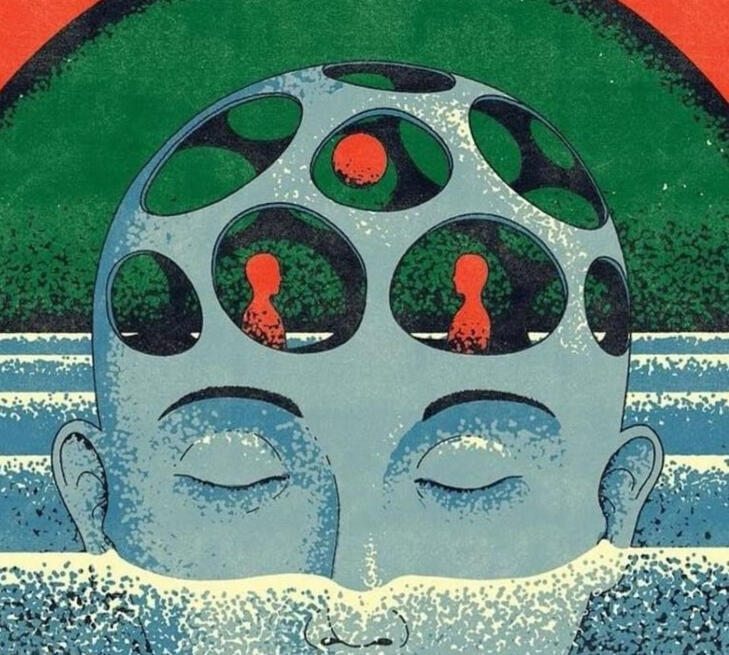
Each week I share a teaching from the dharmic traditions. Not watered down, not repackaged as self-help. Just honest engagement with ideas that have guided people through the full complexity of being alive. Every month we go deep into one theme together — lessons, readings, practice, conversation.This isn't a course you consume and forget. It's a community of people actually trying to live this stuff, at every stage of the path, supporting each other along the way.If that sounds like what you've been looking for, I'd love to have you with us.
Contact
Dr. Ravinjay Kuckreja adalah seorang filsuf, pengajar, dan peneliti yang berfokus pada agama Hindu dan Buddha. Ia mendalami budaya dan etnografi Bali, dengan semangat untuk memperkenalkan kearifan kuno setempat kepada masyarakat luas. Ravinjay adalah warga negara Indonesia bersuku Punjabi yang telah tinggal di Bali selama lebih dari satu dekade. Ia menempuh pendidikan doktoral melalui penelitian tentang kitab-kitab kuno Bali dan India, dan saat ini ia membuat konten pendidikan serta mengajar dari tingkat SMP hingga S3 seputar filsafat dan agama.
Gabung bersama dalam komunitas berbasis WA untuk membahas dan menerima inspirasi seputar filsafat Hindu-Buddha...
Publikasi
Kelas
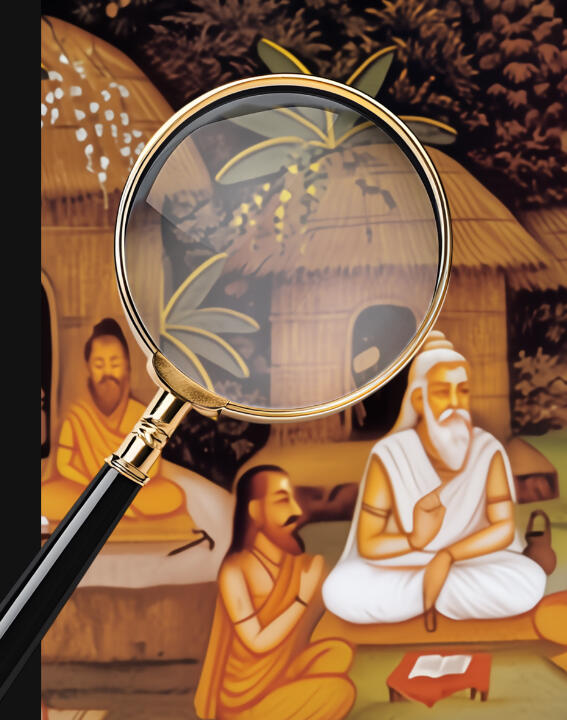
Darśana: Tradisi Filsafat India
Pengantar filsafat India melalui sembilan darśana dalam tradisi Hindu, Buddha, dan Jaina. Kelas-kelas ini mengeksplorasi latar belakang historisnya, perdebatan utama, dan bagaimana setiap tradisi memahami realitas, pengetahuan, dan pembebasan dalam dunia intelektual yang sama.
Buku "Dharma Tattwa"
Workshop
Kursus "Dharma Tattwa"
Belajar agama Hindu dengan santai tapi sistematis, biar lebih paham bagaimana sejarah, konteks dan filsafat bertemu menciptakan budaya dan ritual Hindu yang beragam dan bermakna.
Terbuka untuk semua orang dari latar belakang suku atau agama manapun. Belajar dan diskusi langsung dengan dosen dan peneliti Gen-Z handal, Dr. Ravinjay.
Hubungi